
Mahjong Titan
Kristanix GamesBoard
4.757.26K Reviews
- Version
- 2.9.4
- Installs
- 10.00M
- Age Rating
- Everyone
Screenshots
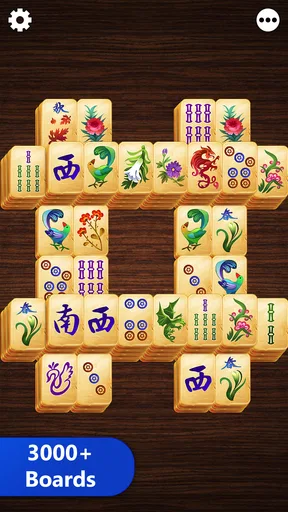
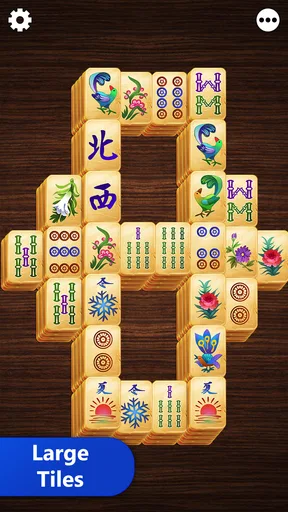
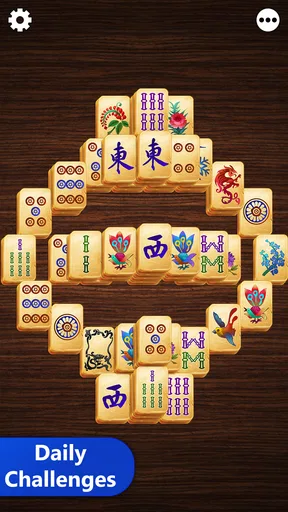
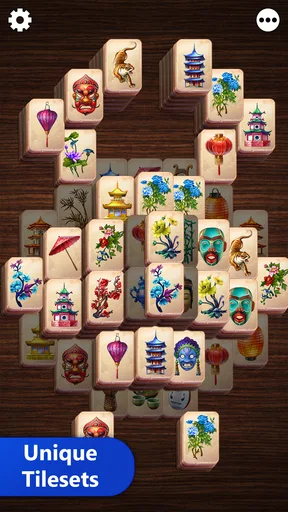
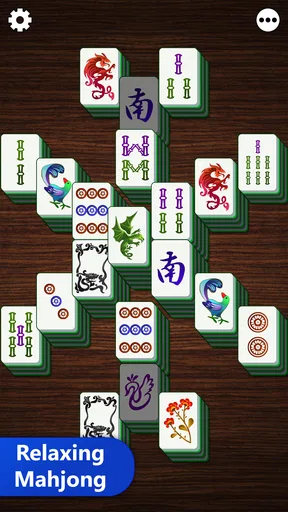
Our Review of Mahjong Titan
 Analysis by Appyee
I first understood the appeal of Mahjong Titan after a short, quiet session rather than a long playthrough. I picked a tile pair, watched the board open slightly, and immediately started scanning for the next useful move. That simple action-feedback pattern is the heart of this free board game from Kristanix Games: choose matching tiles, clear the arrangement, notice how the layout changes, and begin another puzzle because the next one feels manageable.
This is not the competitive, four-player version of mahjong that many people know from tables or online rooms. It is a solo tile-matching game built around concentration, visual searching, and gradual progress. The game offers more than 3,000 puzzles, large tile sets, themes, and other customization touches, so it is aimed at players who want a calm supply of short challenges rather than a story, a campaign with characters, or fast reflex action.
I found it especially easy to recommend to someone who likes crossword puzzles, solitaire, or traditional matching games but wants something more deliberate. The experience is free, suitable for Everyone, and has reached over 10 million installs. Its average rating is 4.7 from around 628 thousand ratings, which fits my impression: the basic idea is familiar, but the large amount of content makes it easy to return to.
How the Mahjong Titan loop feels in everyday play
I find the everyday rhythm here depends less on speed than on how deliberately I read the board: a quick scan before each match can preserve choices that a hurried tap would close off. That makes even a brief session feel like a small planning exercise, rather than just a way to pass time. Next, I’ll look at the practical setup choices that can make those searches easier.
The first action is simple, but the board teaches you to look twice
Every round begins with a visual problem rather than a complicated instruction. I look across the stacked layout and search for two identical tiles that are available to select. A tile generally has to be exposed enough to use, so the real decision is not merely “which two symbols match?” It is “which matching pair should I remove first to reveal the most useful space?” That distinction gives the opening move more weight than a basic memory game.
The large tile sets help here. Symbols are easier to separate visually than they would be in a cramped interface, particularly when I am playing on a smaller phone or taking a quick break in a bright room. The board still asks for attention, though. Similar-looking designs can slow me down, and a careless tap can interrupt the scan I was building in my head. I learned to pause for a second before selecting a pair instead of grabbing the first obvious match.
That small habit is one of the most useful ways to approach the game. I now start by checking the upper layers and the edges, then work inward. Removing a pair that exposes several tiles is usually more valuable than clearing a pair that leaves the rest of the structure unchanged. This is not a guaranteed formula for every puzzle, but it makes the opening feel purposeful and reduces the chance that I spend the middle of a round reacting to a board I accidentally made awkward.
The game works well in an ordinary daily situation. If I have ten minutes before an appointment, I can open it, complete a focused puzzle attempt, and stop without needing to remember a plot or coordinate with another player. If I am tired, I can play more slowly and let the visual search occupy my attention. That makes it a better fit for a waiting room or a quiet evening than for a commute where the phone is constantly being interrupted.
Feedback keeps the search moving
The satisfying part is the immediate change after a correct pair. Two tiles disappear, the arrangement becomes less crowded, and newly exposed symbols create another question. The feedback is modest rather than flashy, but that is appropriate for this type of game. I do not need explosions or elaborate animations to understand that the move helped; the clearer board is the reward.
This creates a steady rhythm: scan, select, clear, reassess. The best moments arrive when one pair opens a small chain of possibilities. I may notice a tile that was hidden, remove its match, and suddenly have a more open route through the layout. The game encourages me to keep reading the board because each successful action changes what is available next.
That rhythm also explains why a round can feel more thoughtful than its rules suggest. The controls are accessible, but the order of removal matters. A player who taps randomly may clear some pairs and still end up with an awkward remainder. A player who keeps checking which tiles are blocking others has a better chance of preserving options. I appreciate that the challenge comes from arranging my attention, not from learning a large rulebook.
The visual themes affect the mood of that feedback. I can choose a presentation that feels more comfortable for a particular session, which matters because a tile puzzle involves staring at the same board for a while. A calmer appearance makes the game feel suited to winding down, while a clearer, higher-contrast setup is preferable when I am concentrating on fine differences between symbols. The themes are not a replacement for good puzzle design, but they make repeated sessions less visually tiring.
One limitation is that this feedback loop is intentionally quiet. Players who want dramatic reactions, competitive pressure, or a strong sense of external achievement may find the response too restrained. The game does not turn a correct match into an event; it turns it into a cleaner board. For me, that is relaxing, but it means the appeal depends heavily on whether I enjoy the act of solving itself.
The reward is a clearer board and the feeling of control
The most convincing reward is not a collectible or a narrative reveal. It is the moment when a crowded layout becomes readable. After several careful matches, I can see routes that were hidden at the start, and that visual progress gives the round its momentum. I often continue because the board looks close to completion, even when I originally opened the game only to fill a few minutes.
There is also a useful mental reward in making a good decision early. When I remove a pair that opens several useful tiles, I feel that I have improved the puzzle rather than merely advanced a counter. This is where the game separates itself from a purely casual matching exercise. The symbols are easy to understand, but the board rewards planning and restraint.
The large puzzle collection supports that feeling over time. With more than 3,000 layouts available, I am less likely to exhaust the experience after a handful of sessions. That does not mean every puzzle feels completely different in spirit; the central task remains tile recognition and careful removal. Still, the quantity makes the game practical for regular short sessions, especially if I do not want to repeat the same board immediately.
The free entry is another meaningful reward for a cautious player. I can try the core experience without paying first, then decide whether it deserves a place on my phone. In-app purchases are listed at $3.99 per item, so I would treat optional spending as something to consider only after I know I enjoy the long-term loop. The game is not something I would install for a single dramatic campaign; its value comes from repeated, low-pressure use.
I also like that the age rating is Everyone. That makes it an approachable choice for households where several people may use the same device, although younger players may still need help recognizing patterns or understanding why a seemingly available tile cannot be selected. The simple rules make it easy to explain, while the need to inspect the layout gives older players enough room to develop a better method.
The reset is what makes another session tempting
When a puzzle ends, the experience resets cleanly into the possibility of another board. That reset is important because the game does not rely on a long emotional arc. I am not returning to discover a new character or resolve a cliffhanger. I return because the previous layout has been cleared and the next one offers a fresh visual problem with the same familiar rules.
This makes the game unusually flexible. I can play with full concentration, or I can use it as a gentle mental break. A longer session lets me compare different opening choices and become more deliberate. A shorter session still feels complete if I manage to make meaningful progress. The lack of a required narrative checkpoint means I can stop when my attention starts to fade instead of pushing through a chapter.
That freedom has a downside. Without a story or a strong competitive layer, the reset can eventually feel repetitive. The themes and broad puzzle selection help, but they do not transform the basic activity. If I am looking for a game that constantly introduces new mechanics, this is not the right choice. The reset is attractive precisely because it preserves the same dependable structure, and that can be either comforting or monotonous depending on my mood.
For better results, I avoid treating every round as a race. When I rush, I overlook blocked tiles and create unnecessary problems for myself. I also try to use a reset as a learning opportunity: after a difficult finish, I think back to the first few pairs and ask whether I removed a match simply because it was visible. That small review changes the next attempt from a random restart into a more informed one.
This is also where it helps to separate the game from traditional mahjong. There is no need to learn scoring systems, winds, hands, or table strategy here. Someone wanting the social and competitive character of the classic tile game would be better served by a multiplayer mahjong app. Someone wanting a solo puzzle with no opponent waiting for a turn will probably prefer this format. The choice depends less on the word “mahjong” than on the kind of attention the player wants to spend.
Who should install it, and who should skip it?
I would suggest it to players who enjoy visual organization, solitaire-like decision making, and games that can be paused without consequence. It suits people who want a calm activity after work, a small concentration exercise during a break, or a familiar puzzle to play regularly without committing to a large time block. The free price also makes it easy to test without turning the decision into a purchase.
It is a particularly good match for someone who likes improving a process. The game rewards looking ahead, protecting useful tiles, and choosing pairs for what they reveal rather than what they remove immediately. Those habits are not announced as advanced lessons, but they become apparent through play. I found that the experience became more satisfying once I stopped asking only whether a pair was legal and started asking what the board would look like afterward.
I would skip it if I wanted direct competition, online conversation, a story campaign, or rapid action. I would also hesitate to recommend it to anyone who becomes frustrated by repeated visual searching. The rules are easy, but easy rules do not mean every board is effortless. Players with difficulty distinguishing small symbols may need to adjust the theme or tile presentation to find a comfortable setup.
Compared with a standard solitaire game, this offers more spatial inspection and less dependence on a familiar deck structure. Compared with a match-three game, it is slower and more deliberate, with fewer rewards built around speed or chain reactions. Compared with a traditional mahjong app, it removes the social and scoring dimensions in favor of a solo clearing puzzle. Those differences are not weaknesses by themselves; they clarify the audience.
Practical details before you make it a regular game
The app has been available since March 11, 2015, and the current version is 2.9.4. It supports devices running at least OS 7.1, which makes it accessible to people using older compatible hardware rather than requiring a recent phone. I would still check that the display feels comfortable for tile reading, because screen size and clarity matter more here than they do in a text-heavy game.
Kristanix Games has kept the central design focused on the board. That focus is a strength when I want an uncluttered pastime, but it also means I should not expect the surrounding systems to carry the experience. The puzzle itself has to hold my interest. If I enjoy finding patterns and making careful removals, the straightforward design stays appealing; if I need constant novelty, the generous content count may not be enough.
My practical advice is to choose a theme before judging the game too quickly, then play several layouts rather than stopping after one. The first board mainly teaches the visual language. The later boards reveal whether I enjoy the decision process. I also recommend playing with a deliberate opening scan and leaving a few seconds between moves. That turns the game from tapping matching pictures into a small exercise in planning.
My verdict on the complete loop
Mahjong Titan succeeds because its loop is honest and easy to understand. I take an available pair, receive immediate visual confirmation, gain a clearer board, and decide whether I can expose one more useful section. When the puzzle ends, the reset offers another compact challenge without demanding a new commitment. The reason to begin again is not spectacle; it is the quiet satisfaction of seeing whether I can make better choices on the next arrangement.
After spending time with it, I see the game as a dependable solo board companion rather than an all-purpose mahjong experience. Its free access, Everyone rating, broad puzzle supply, large tile sets, and themes make it welcoming. The 4.7 average from roughly 57 thousand written reviews suggests that many players respond to the same uncomplicated structure, while the 10M+ install milestone shows that it has found a substantial audience.
My recommendation is positive, with one clear condition: enjoy the process of searching and clearing. If that sounds relaxing, this is an easy game to keep available for waiting periods, evening breaks, or short daily routines. If you need multiplayer rivalry, dramatic progression, or constantly changing mechanics, choose another board game instead. For everyone in between, the best test is simple: play a few puzzles slowly and notice whether the cleaner board makes you want to start one more.
Verdict
Strengths of Mahjong Titan
- Large collection of mahjong layouts keeps sessions varied.
- Offline play makes it useful without a Wi-Fi or mobile connection.
- Helpful hints and shuffle options assist when no moves are obvious.
- Simple controls make tile selection comfortable on phones and tablets.
- Quick-loading levels suit short breaks as well as longer play sessions.
Limitations of Mahjong Titan
- Some layouts may feel repetitive after extended play.
- Hints and shuffles can reduce the challenge for experienced players.
- The visual style is functional but may seem dated to some players.
- Difficulty can vary noticeably between layouts.
- Frequent players may want more customization and progression options.
Similar Picks in This Category
View All
Ludo King®
Gametion4.1

Ludo
Yarsa Games4.6

Tile Master® - Matching Game
Higgs Studio3.6

Checkers Online
CC Games4.6

Dominoes
Loop Games4.7

Chess
Chess Prince4.6
Frequently Asked Questions
What is Mahjong Titan, and how is the game played?
Mahjong Titan is a tile-matching puzzle game based on traditional Mahjong solitaire. Your objective is to remove pairs of identical, free tiles from a layout until the board is cleared. Only tiles that are not covered and have an open side can usually be selected. The game focuses on pattern recognition, concentration, and planning rather than competitive multiplayer Mahjong rules.
Does Mahjong Titan work without an internet connection?
Mahjong Titan is generally designed as a casual puzzle game that can be played offline, which makes it suitable for travel or situations without Wi-Fi or mobile data. Some features, such as advertisements, cloud-related services, analytics, or promotional content, may require an internet connection. It is a good idea to launch the game once online and check which features remain available offline.
Is Mahjong Titan free to download and play?
Mahjong Titan can typically be downloaded and played without an upfront purchase, but the free version may include advertising or optional in-app purchases depending on the platform and current release. Purchases may be offered to remove ads or unlock additional content. Before downloading, review the store listing carefully because pricing, advertising, and available purchase options can change between Android and iOS.
Is Mahjong Titan suitable for beginners and children?
Mahjong Titan is approachable for beginners because its core controls are simple: tap two matching available tiles to remove them. Early layouts usually help players learn the rules gradually, while later boards become more demanding. The game is generally suitable for casual family play, although parents should check the current age rating, advertising content, and privacy information before allowing younger children to use it.
What devices and features are supported by Mahjong Titan?
Mahjong Titan is available for mobile devices through supported Android or iOS stores, but compatibility depends on the operating system version and the specific device. The game commonly includes multiple tile layouts, visual themes, hints, shuffles, undo options, and progress or achievement features. Exact content can vary by version, so check the official store page for current requirements and supported devices.
Play our best games!


